
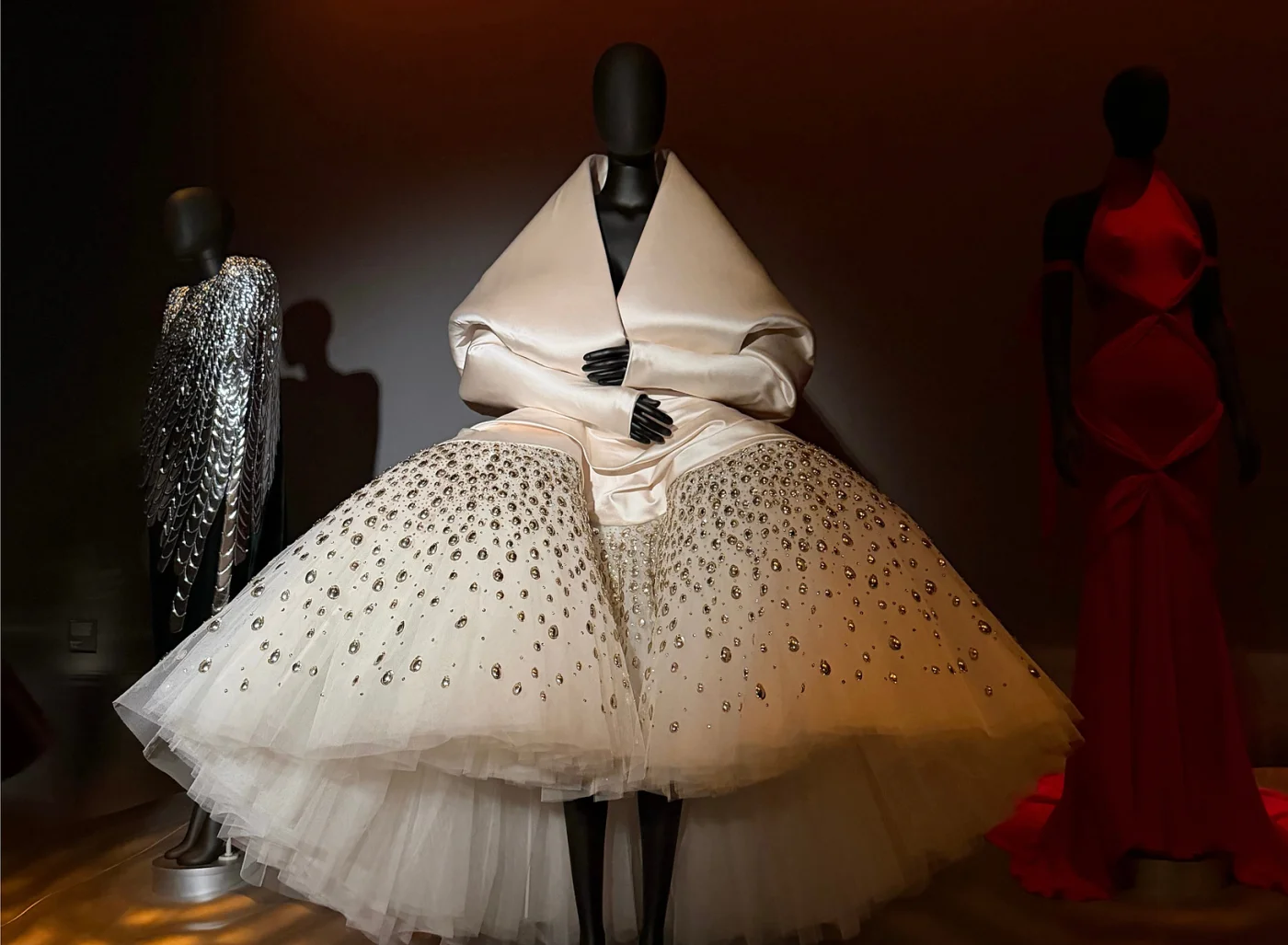
PRINT / The Book Agency’s Creative Director Camille Dubois takes notes on the creative process from designers Elsa Schiaparelli and Daniel Roseberry of revered fashion house Schiaparelli.
This month, I visited the Victoria & Albert Museum in South Kensington to experience “Schiaparelli: Fashion Becomes Art”, a retrospective of Elsa Schiaparelli’s eponymous fashion house from its establishment in the 1920s through today, where it is now helmed by American-born Creative Director Daniel Roseberry. As a creative, I have always been drawn to fashion and its intersection with art. While touring the exhibition, I could not help but see the parallels between the designers’ practices as my own at PRINT, where as Creative Director, I design luxury books. An impressive exhibition of clothing, accessories, jewelry, and Surrealist art—including artwork from Elsa’s collaborators and friends Man Ray, Pablo Picasso, and Salvador Dalí—this show will remain a source of inspiration for me for years to come.
Creativity within constraints
Creatives must work within constraints: a painter with a canvas, a fashion designer with the human body, or a photographer with the frame of the camera’s lens. Like Elsa and Daniel must construct garments within the realm of fashion, as a book designer, I am required to stay within the constraints of a rectangular page. A self-trained female designer working nearly a century ago, Elsa’s designs are truly groundbreaking and modern. She was renowned for pushing the boundaries, from encouraging textile manufacturers to experiment with new materials to exploring unconventional color combinations to reimagining traditional styles. One creation I gravitated towards was an elaborate embroidered full-length cape from Daniel’s Spring/Summer 2022 collection, a piece that harks back to Elsa’s 1939 Apollo of Versailles evening cape and features the same tuxedo collar designed to appear as though it is worn backwards. A menswear staple, this tuxedo collar has been reinterpreted for a female audience as a detail that is at once playful and commands power.
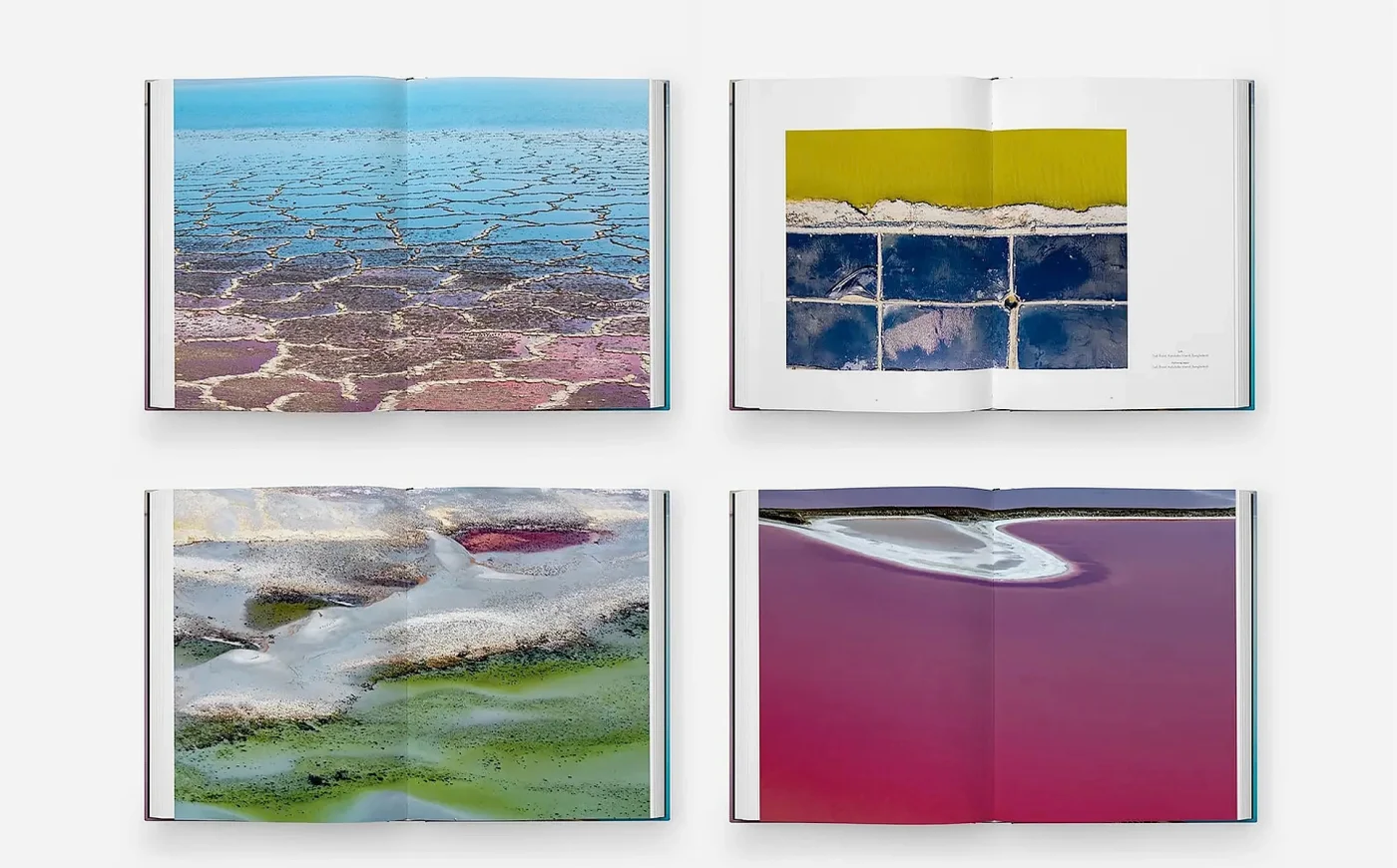
My work revolves around the rectangular shape of a book, an object that presents a standardized frame that I must work within. As with fashion, I have the opportunity to explore color and material, from linen covers to rose gold metallic foil to gatefolds with full-bleed imagery spreading across pages. A book, like a fashion collection, is an assortment of components united by a continuous thread. Text, images, and a cover must harmonize to communicate a brand or individual’s story, just like a collection needs to encapsulate the entirety of a designer’s creative message.
Collage as clothing
One object from the exhibition that particularly resonated with me was Elsa’s newsprint textile (1935), a swatch of cotton fabric printed with a collage of news cuttings and headlines about her own career and personal life. Part of her “Stop, Look and Listen” collection, this fabric was custom made for Schiaparelli by Colcombet and was used to make dresses, parasols, hats, and men’s ties. The pattern evokes pop culture and reminds me of collages by artists Max Ernst and Joseph Cornell, and the Surrealist artwork that Elsa so often referenced.
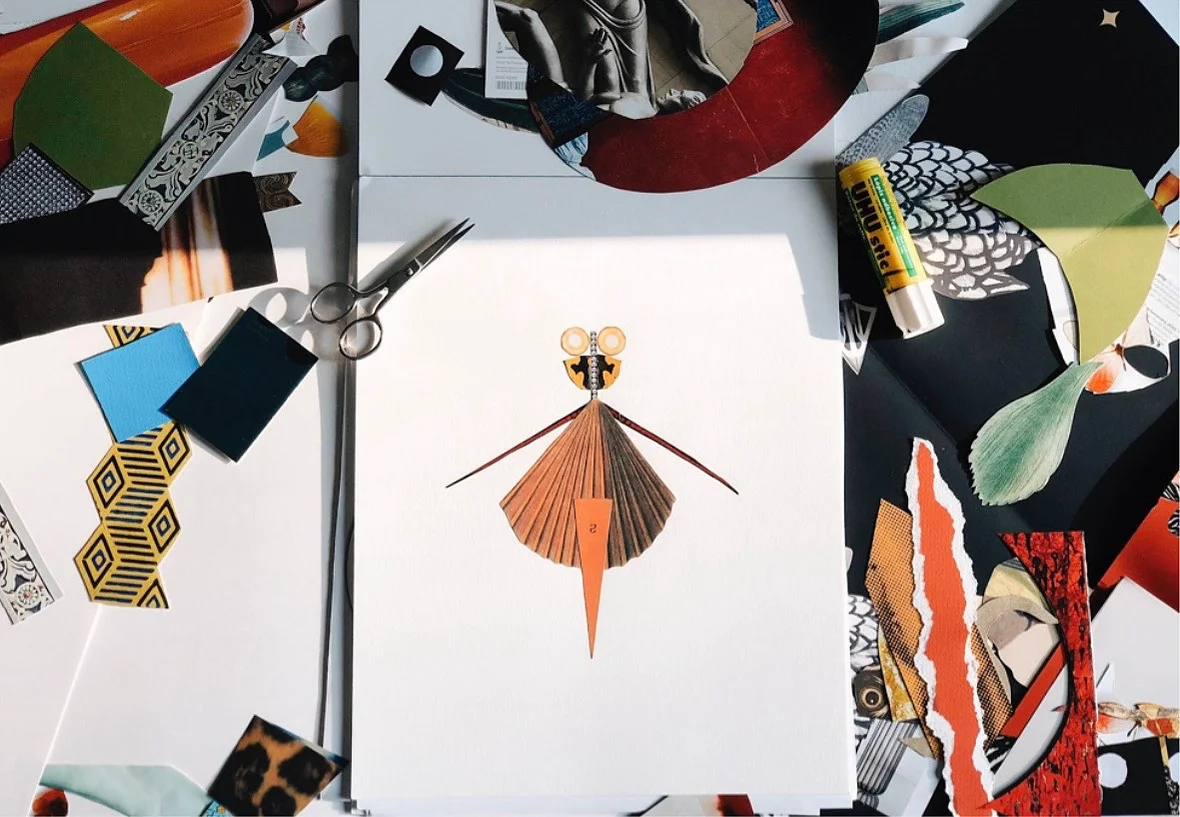
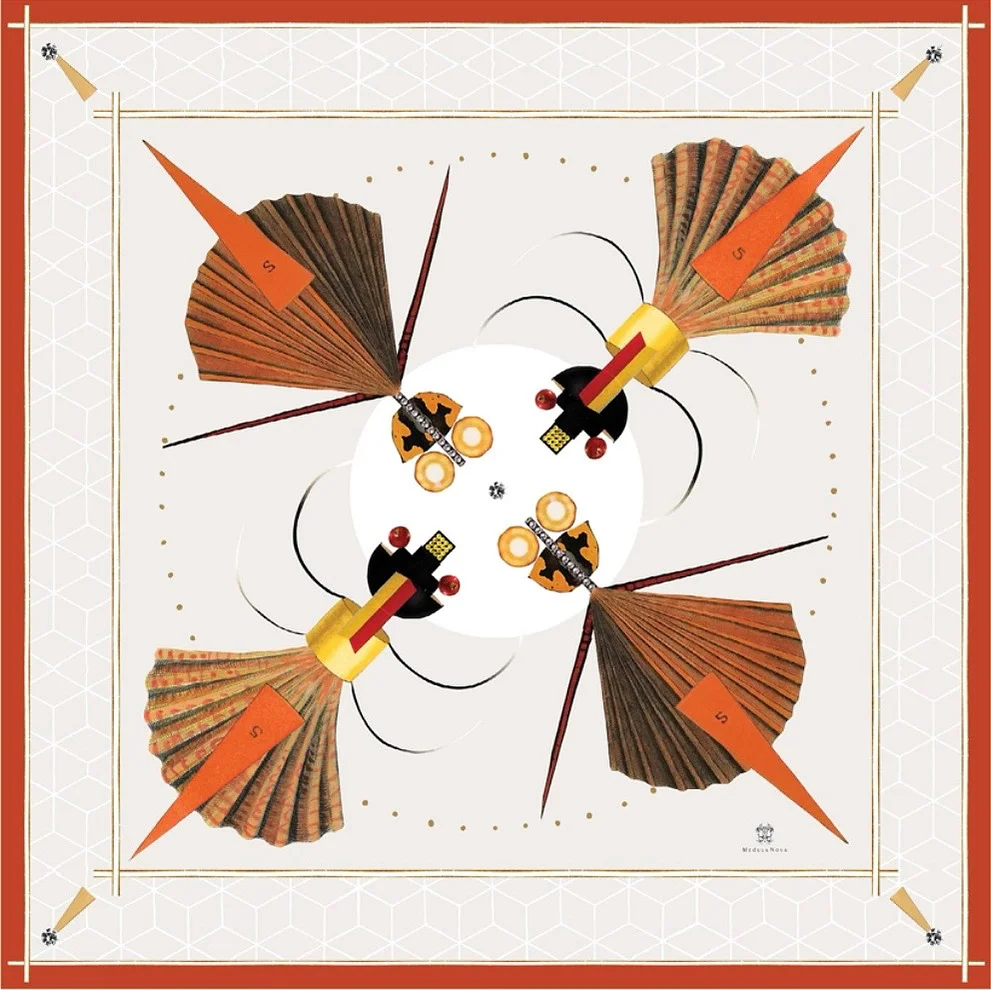
Collage is one of my favorite mediums and an art form I’ve experimented with on my own both personally and professionally. I have always gravitated towards pattern and find it calming. In 2018, looking to explore my practice further, I printed my collages on fabric and porcelain and launched my own label, Medusa Nova. My tea set was featured on Moda Operandi, and I designed scarves with my own textiles printed with my artwork. Prior to becoming a book designer, I wanted to be a textile designer, and I hope to one day return to this passion.
A creative dialogue
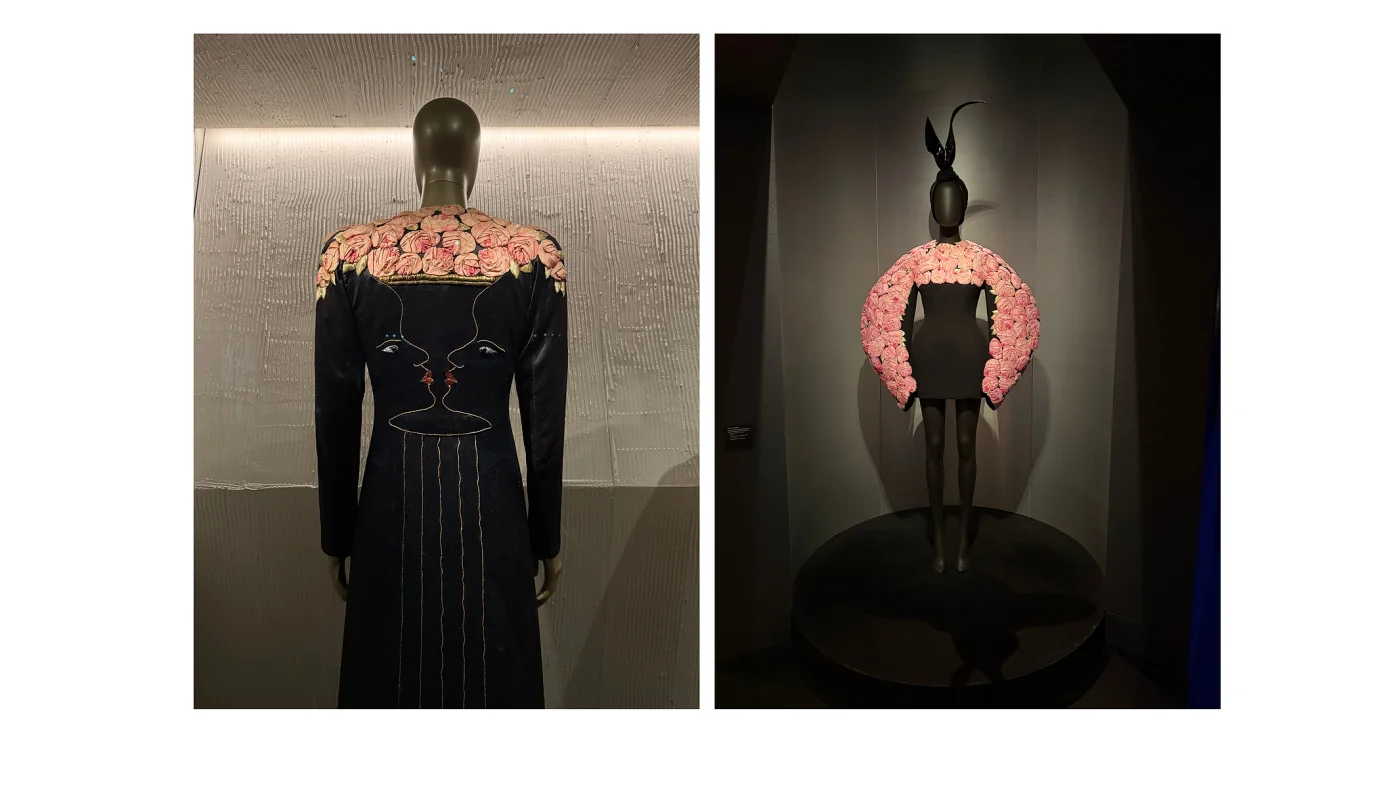
The exhibition offered an incredible opportunity to observe two designers from different generations who never knew one another in conversation. Daniel’s clothing builds upon the strong foundation Elsa set forth of feminine power, self-expression, and garments with a sculptural approach. There is a clear storyline that connects the two, from the use of rosettes to anatomically-inspired accessories, yet both present a one-of-a-kind, modern look that reflects their respective time periods.
As a luxury book designer, my role is to collaborate with my client, understand their creative vision, familiarize myself with their aesthetic, and create an art object that embodies their brand and individuality. My creative process involves translating an individual or brand into a completely new medium, which is not without its challenges. Unlike traditional publishers, we allow clients to be involved in every step of the process, have significant input into the creative direction of their book, and maintain complete ownership of their work. I never tire of seeing a book I have designed for the first time and holding its fully-formed, physical object in my hands.
Materials matter
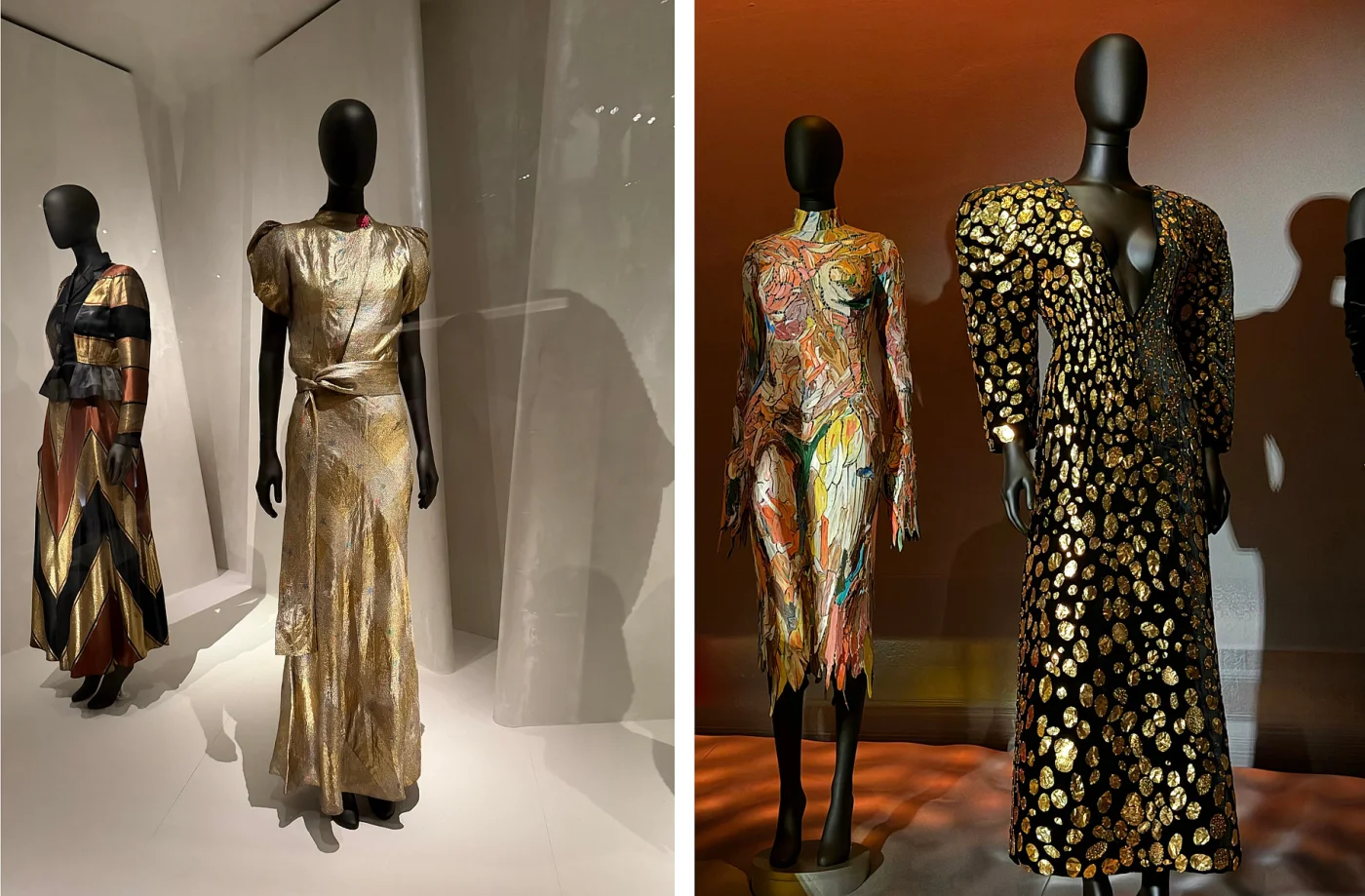
In design, I believe that an object is only as successful as its materials. Elsa’s use of uncommon fabrics and whimsical accents sets her apart from her counterparts. Her determination towards offering her clientele the best of the best—requesting her textile manufacturers to supply her with the newest, highest quality materials— is immensely impressive. She designed avant-garde garments crafted in looped lamé, woven metal threads, cellophane, and “riboulding” rayon crêpe.
While today commonplace, Elsa’s use of exposed plastic zippers was revolutionary for its time, as this form of closure was not used in haute couture and was typically concealed within the garment. Buttons, a once strictly functional feature, were reimagined as statement pieces, a defining element of the clothing item. Using materials such as leather, painted metal, plastic, resin, and enamel, the designer made buttons that resembled comedy and tragedy masks, plastic beetles, peanuts, butterflies, and more. Beyond adding wit and whimsy to a garment, these buttons could be symbolic of a larger message; a Spring 1940 suit jacket ornamented with enamel globe buttons represented a united world amidst war.
At PRINT, I work with the world’s leading artisans to produce our books on state-of-the-art printing presses, collaborating with vendors to hand-select premium materials for each project. Like Elsa, I urge my vendors and clients to take creative risks, and experiment with new materials and layouts. As with Schiaparelli’s couture, each project is customized to a client’s specifications, from paper selection to number of pages. Without the aid of our masterful mills and printers, our book-objects would not be the same.
The design language of legacy
An extensive overview of Elsa’s life and work culminating in images of today’s pop culture icons, including Ariana Grande, Hunter Schafer, and Daphne Guinness donning the house’s clothing, “Schiaparelli: Fashion Becomes Art” is a study in legacy. Bookmaking provides me with the opportunity to explore legacy as well. As with an exhibition, a book serves as a culmination of a client’s story, from the very beginning through to today. My visit to the V&A South Kensington is a welcomed reminder of what a privilege it is to use my creativity to tell others’ stories and share them with the world.
The “Schiaparelli: Fashion Becomes Art” exhibition is currently open in London at the V&A Kensington and runs through November 8, 2026. To learn more about PRINT / The Book Agency and our process, please visit our website at https://www.print-thebookagency.com.